let's connect
By Laura J. Huffman and Steven Pedigo
This article appeared on Tuesday, June 30, 2026 in the Dallas Morning News.
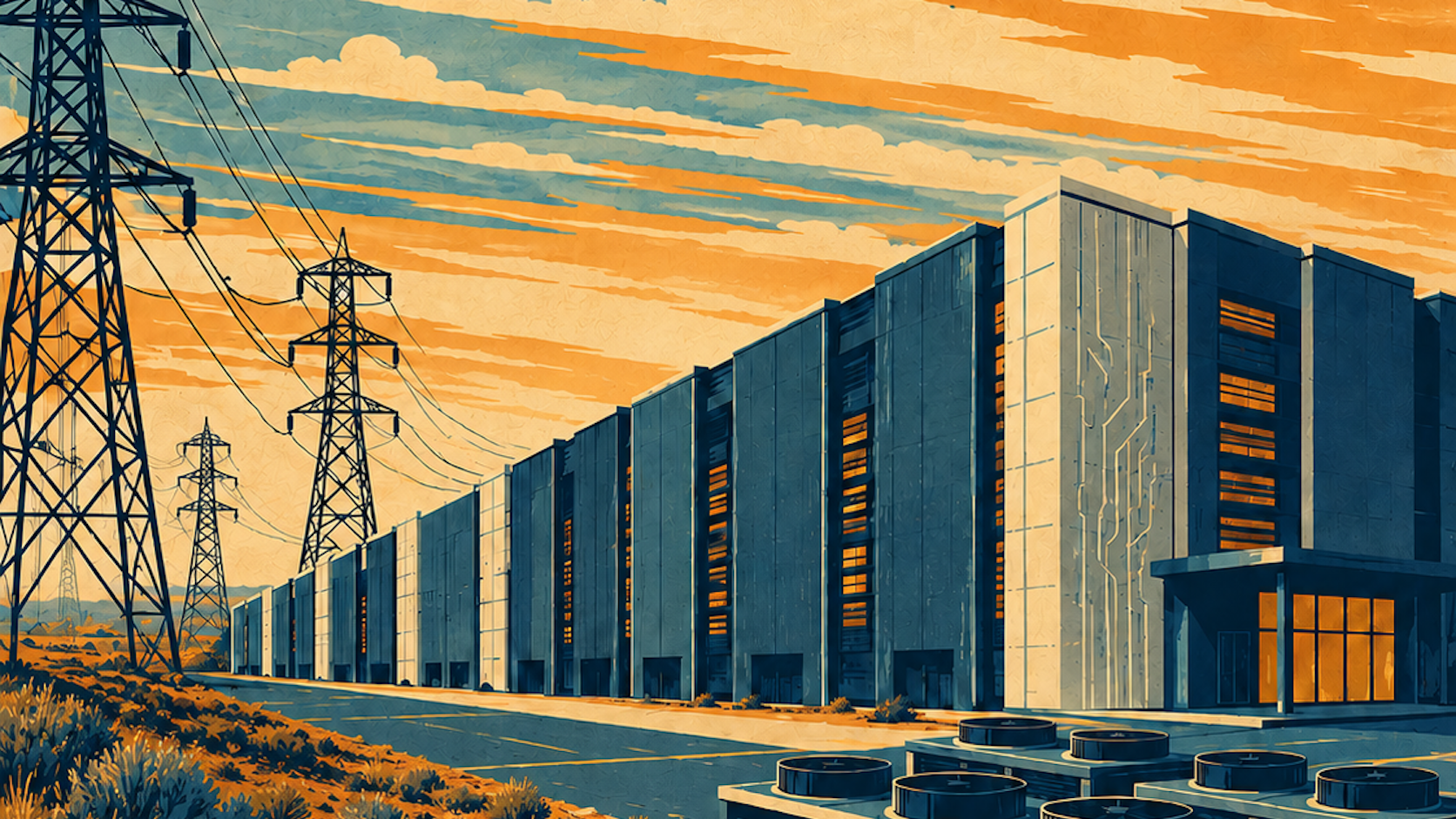
Texas is one of the most active data center markets in the country, and North Texas is its leading edge. New hyperscale projects are being proposed across Dallas-Fort Worth, from suburban Dallas to Tarrant County to the corridor running north through Denton and Collin. Local officials are weighing these proposals on timelines measured in months, with consequences that will be felt for decades.
The scale is staggering. In the first quarter of 2026 alone, ERCOT received proposals from nearly 200 data centers and large energy users seeking 438 gigawatts of new power, more than five times the state's all-time peak demand. The grid Texas built for 30 million residents is now being asked to accommodate a parallel industrial economy that, if current projections hold, would draw more power than every household and business already on it.
The political ground is shifting fast. On June 10, Gov. Greg Abbott released sweeping recommendations for the 2027 Legislature: data centers should add their own power generation to the grid, pay their own interconnection costs, use closed-loop water systems, and report electricity and water use annually. He also called for repealing the sales tax exemption that has cost Texas roughly $1 billion a year. For a Republican governor in the country's most business-friendly state, the move is a striking acknowledgment that the current framework is not working.
This is not just an electricity problem. In Virginia, the country's largest data center market, voter support has collapsed from 69% in 2023 to 35% today. Texans are watching the same fights play out in their backyards. Now 56% oppose building a data center in their community. Residents see their water tables drawn down, utility bills rise and the landscape transformed. They are told daily that AI is coming for their jobs, then asked to underwrite the infrastructure that will accelerate that disruption. They are not being unreasonable. They are doing the math.
The bind on the other side of the table is just as real. The Texas Legislature has steadily stripped local governments of the tools they need to raise revenue. In 2019, lawmakers capped annual property tax revenue growth at 3.5%. In 2025, they tried to push it to 1%. When a developer arrives with a project capable of funding schools, roads and public safety, local officials cannot be faulted for listening. Abbott's recommendations would address part of that. They would not give local communities the authority to say no.
That is the tension at the center of this debate. The question now in front of growing communities is the wrong one. The real choice is not between a data center and no data center. It is between a data center and something else.
Every growing community has a finite number of large, investment-ready sites with highway access, water service and electrical capacity already in place. In North Texas, those catalyst sites carry strategic weight. They will determine whether North Texas can compete for the next generation of semiconductor manufacturing, the electric vehicle and battery manufacturing along major freight routes, aerospace and defense expansion around Fort Worth, and the biotech and medical research clusters anchored by UT Southwestern Medical Center. North Texas has spent two generations building those ecosystems. Each one was a decision a community made about what its future would look like.
Once one of those sites is committed to a hyperscale data center campus, it is effectively removed from the regional economy for decades. The substation built for the data center cannot simultaneously power a chip plant. The water rights and grid capacity go with it. In some fast-growing parts of the region, there will not be enough left to support any other major investment.
That trade-off is rarely discussed honestly because developers come to the table with the metric local governments find hardest to ignore: tax revenue per acre. Their headline numbers are real. But a data center of 250,000 square feet typically employs only about 50 full-time workers, according to data center representatives interviewed for a 2024 study by Virginia's nonpartisan Joint Legislative Audit and Review Commission. A single anchor investment on the same site can support thousands of permanent jobs and the kind of regional ecosystem that reshapes economies for generations. Brookings research released this spring found that the broader technology jobs boosters promise only materialize in counties with four or more facilities, a threshold most communities will never reach.
When we advise mayors and economic development organizations, we tell them three things. First, take stock of the strategic land, water and grid capacity you actually have. Most regions discover they have far less than they thought. Second, set clear public-return standards before talking to developers: what jobs justify the commitment of scarce capacity, what wages relative to the local median, what level of community benefit counts as acceptable. Communities that write their standards down in advance stop negotiating from fear. Third, if a project moves forward, ensure the public benefits match the scale of what is being given up: ratepayer protections, water reuse, workforce pipelines, and a tax structure sufficient to fund the schools and roads that growth strains.
Some communities will conclude that a data center is the right project for them. Others will decide their best land should hold something else. Both can be the right answer. What matters is that the decision is made on purpose. Abbott has now called for the Legislature to take this up in 2027. The test will be whether the framework that emerges gives growing communities the authority to decide what their best land should hold.
Local leaders need the authority to decide what belongs on their most strategic sites.





.png)











































Let’s turn your next big move into real momentum
Let's talk